A cleaner website structure should make the venue easier to understand. It should also account for the useful material already being shared, read and found. Before approving new layouts, decide what deserves to carry across. Our event venue website redesign service includes that conversation in the migration brief.
The right inventory goes beyond the pages shown in the menu. Your team may share a direct brochure link, planners may reference a particular event space, and past stories may show arrangements that visitors still want to explore.
Gather the addresses your business actually uses
Start with the website’s public pages, galleries, posts and downloads. Then ask the people answering enquiries which links they send most often. Check approved brochures, social profiles and supplier listings for links the website itself may not make obvious.
Where access is authorised, reporting can add evidence about visits, search visibility and links. Keep the observation period attached. A quiet month does not establish that a page has no use, particularly where the venue’s sales cycle or offer has changed.
Google’s site move guidance recommends identifying important URLs using sources such as sitemaps, analytics and links. The venue team’s direct knowledge adds business context to that technical inventory.
Separate the page’s purpose from its current design
A weak layout does not make the underlying page disposable. An event space page may need new photographs and clearer wording while retaining a useful address and purpose. A practical location page may be visually modest but important to people planning a visit.
For each page, write the question it answers and the next useful step. If the team cannot explain the purpose, investigate before retaining or removing it.
Our repair or redesign guide helps distinguish content problems from limitations that justify replacing the wider website.
Make four clear content decisions
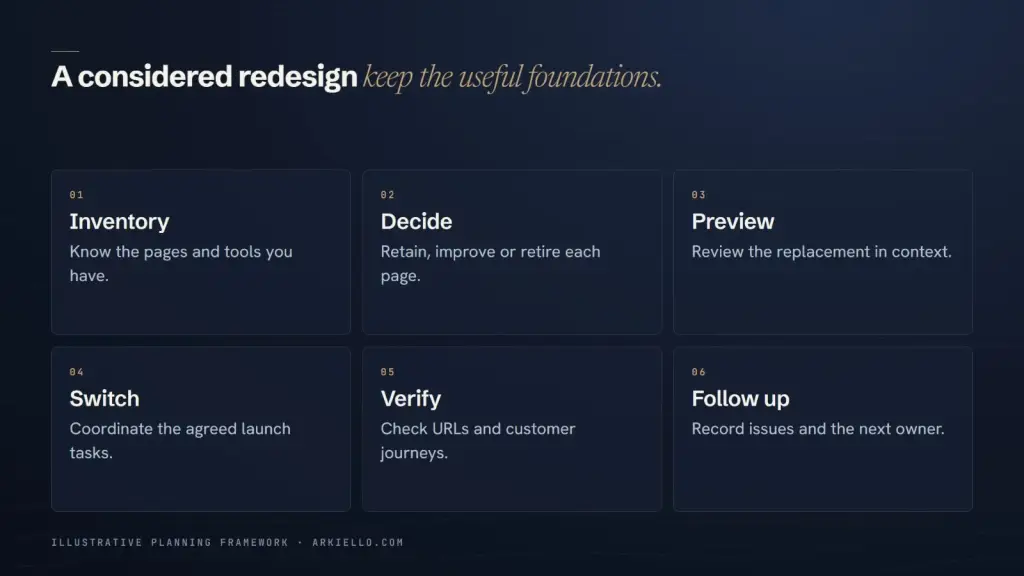
A small decision record can use four outcomes:
- Keep an accurate, useful page and retain its address where practical.
- Improve a useful page whose presentation or information needs work.
- Combine genuinely overlapping material into a suitable destination.
- Retire material that no longer serves the business, with an agreed technical treatment.
Name the proposed destination and reason for each change. A venue that has renamed a space needs a different discussion from one that has stopped offering an arrangement entirely. Do not assume the homepage is a suitable destination for every old link.
This record also gives the owner a manageable approval task. They can review meaningful decisions rather than compare two long website exports without context.
Treat galleries and brochures as content too
Ask which stories remain representative, which photographs are approved and whether captions still describe the current arrangements accurately. Keep authentic past-event material clearly contextualised when it does not show the present offer.
For downloadable information, confirm the approved version and who can supply updates. If a brochure’s address appears in printed material, account for that existing use in the migration plan. Changing the filename for neatness can affect a link someone already has.
Do not carry private material or outdated information into the new site simply because it was included in an export. The inventory is a review process, not automatic approval to republish everything.
Ask how the decisions become a checked release
Once the owner approves the page record, the developer should explain how retained pages and changed destinations will be verified. Include the visible information, relevant internal links and important downloadable files.
Our guide to mapping old URLs after a redesign explains the wider redirect discussion. The venue website switch guide brings those checks into the release plan.
Commission the inventory before losing the context
ARKIELLO’s Shuttersteve migration case presents a Canadian photography and film website redesign prepared for review, including content migration. It demonstrates the type of inventory work involved; it is not evidence of rankings or a Tagaytay venue result.
From our Tagaytay base, we work with local and international clients. Send your venue website and the information your team already shares. We can discuss a practical first phase for your event venue redesign, with the useful existing pages accounted for before the new structure is approved.