A useful website report helps the venue owner decide what needs attention next. A list of updates is incomplete if it hides an unapproved brochure. A chart needs context if the team cannot tell whether it counts a click, a received enquiry or a confirmed tour.
ARKIELLO’s event venue website maintenance service separates technical care, content changes and SEO review in the agreed scope. The monthly report should make the work and its limits equally clear.
Establish the reporting period and scope
Start with the dates covered, the website reviewed and the work included in the service. Name any separate assignments so the owner can understand what the report accounts for. Technical maintenance, ongoing content and search review may have different responsibilities.
State the reporting sources and when their figures were retrieved. If a source is unavailable or the enquiry record is incomplete, say which part is missing. A blank box or a silent zero can encourage the wrong conclusion.
Keep the opening readable. The owner should be able to find the month’s completed work, outstanding dependencies and required decisions without interpreting a technical log.
Show completed work with a checkable result
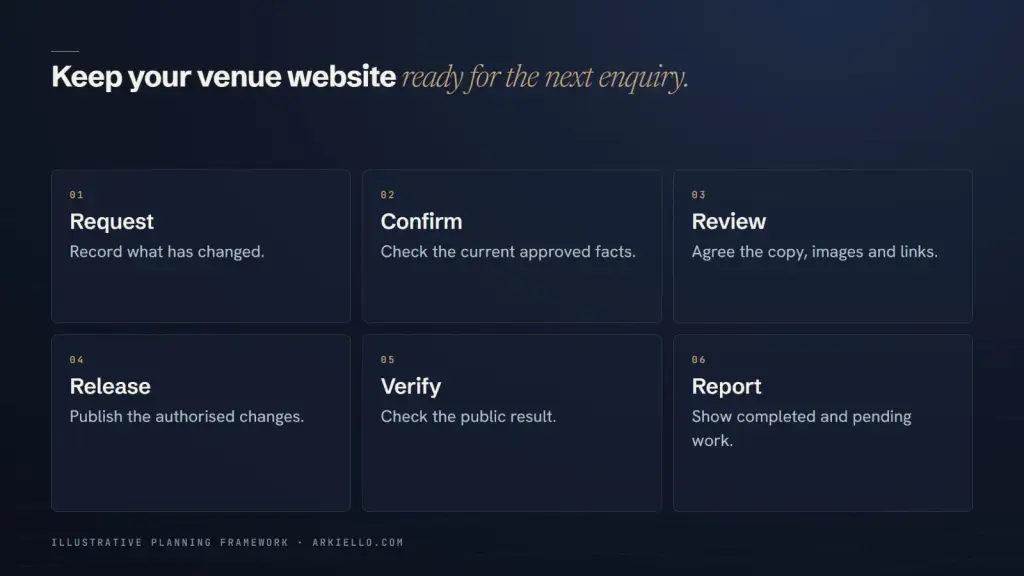
Describe the change and why it mattered to the venue’s current information or website operation. Link to the relevant public page where appropriate and state how completion was checked. Work prepared in a preview should retain that status until the agreed release and public check occur.
For a hypothetical package update, a useful entry could identify the approved wording, the pages and brochure changed, and the date their public versions were reviewed. It would also note if the social link remained with the venue manager. That is more informative than a line saying content updated.
The package update workflow provides the underlying record. The monthly report summarises its outcome without duplicating every approval message.
Keep unresolved dependencies visible
Separate unfinished work from completed items. For each dependency, show what is needed, who supplies it, which task it affects and the next decision or agreed review point.
A compact list might include:
- A replacement brochure awaiting venue approval.
- An expired offer awaiting a decision on its useful replacement.
- A photograph awaiting confirmation of its space and permitted use.
- A report section awaiting access to its agreed data source.
These are hypothetical examples, not a statement about a particular venue. Give each real item a clear status and owner. If timing is uncertain, explain the dependency rather than imply a completion date.
For an ended campaign, link the decision to the revise, retain or retire record. The report should show whether that decision is approved, implemented or still open.
Present actual figures with their definitions
Use the venue’s available figures and label their meaning. Search impressions and clicks describe search activity. Website visits describe another stage. Received enquiries, suitable requests, confirmed tours and venue-confirmed bookings depend on the team’s corresponding records. Keep those stages distinct.
Show the period, source and definition beside each relevant figure. Where a comparison is useful, identify the comparison dates and any known changes in collection. Avoid filling an incomplete enquiry log with estimates presented as fact.
The existing venue SEO enquiry-tracking guide covers measurement definitions and setup decisions. A monthly report uses that agreed framework; it does not need to repeat the setup instructions every month.
Explain observations without inventing a cause
A page change and a later movement in enquiries can appear in the same report without proving that one caused the other. Include relevant context supplied by the venue, such as advertising, a showcase event, changes in available dates or incomplete follow-up records.
Distinguish what the figures show from what needs investigation. If more people opened a package page but received enquiries were unchanged, that is an observation to discuss. It does not establish a failed website or a successful SEO result on its own.
Use the broader wedding venue SEO service when continuing search work needs a separate scope.
Finish with decisions the owner can make
Prioritise a small set of next actions. State the problem, proposed work, required input and reason for its order. The owner can then approve a brochure revision, resolve an offer decision or request investigation of an unusual figure.
Discuss your venue website reporting with ARKIELLO. We are based in Tagaytay and work internationally. Share your current report and the decisions it leaves unclear so we can assess the scope and evidence needed.