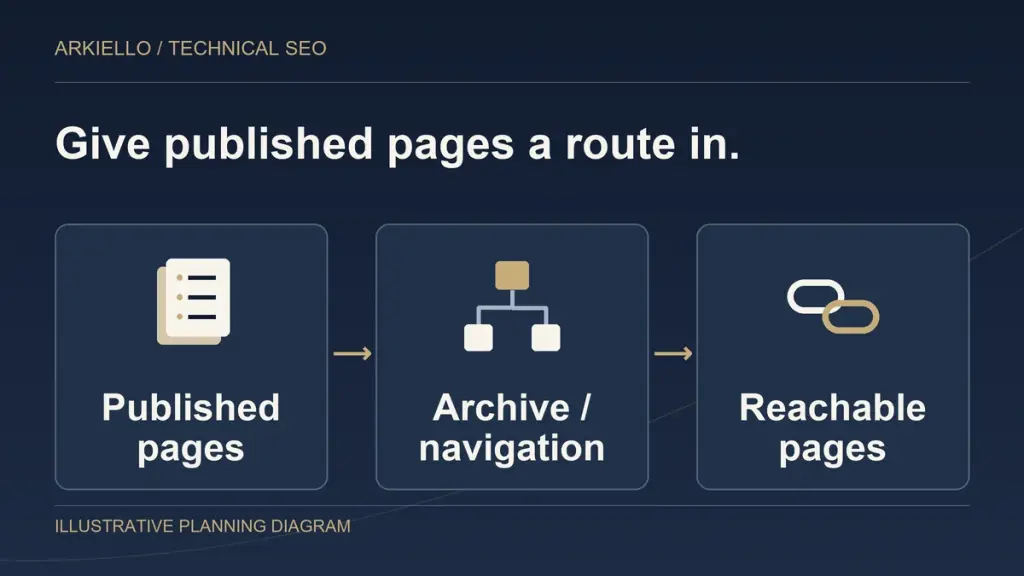
A page can load perfectly when you paste its address into a browser and still be difficult to find through the website. Before commissioning replacement content, check how a prospective customer would reach the work you have already published.
ARKIELLO’s technical SEO audits and fixes include that discovery question. The useful starting point is a list of important public pages, the routes visitors should use and evidence of where the journey breaks down.
Start with the pages your business needs people to find
Identify the service pages, useful articles, approved project examples and contact routes that support a real visitor decision. Agree their purpose with the person responsible for the business content.
For each important destination, ask where someone would encounter a relevant link. That could be the main navigation, a service overview, a related article, a project story or a complete article archive. Different pages can have different routes into them.
The aim is a useful structure your team can explain. A long menu containing every address can make navigation harder. Choose the links that help people move from their current question to the next relevant answer.
Separate a working address from a working discovery route
Check the direct address first, then approach the page through the website. These checks answer different questions. The direct visit establishes what that address currently returns. Following links shows whether the intended visitor journey reaches it.
For a blog, move beyond the first screen of recent posts. Look for older-page controls, categories where used and relevant links within the articles. Confirm that page numbers and Previous or Next links show different, appropriate content.
For services, follow the route from the main service overview through the relevant detail page and its enquiry action. Record missing links, confusing labels and destinations that lead somewhere unexpected. If the concern is Google visibility, our indexing-versus-ranking guide helps separate that investigation from the website navigation review.
A historical example from ARKIELLO’s own website
On 18 October 2026, our publication audit found 27 ARKIELLO articles already publicly available. All 27 returned HTTP 200 and appeared in the public sitemap. The main Insights listing displayed ten articles and had no pagination controls, leaving 17 absent from that listing.
Those figures describe the historical situation before the repair. They are not the website’s current article count or evidence that Google had excluded the older posts. Other contextual links could still lead to individual articles.
The repair added native Previous, numbered-page and Next navigation. Checks confirmed that the archive then exposed all 27 articles exactly once across its pages. The export process also gained a published-post completeness check to catch missing articles in a release.
You can explore the current ARKIELLO Insights archive to see the navigation in use. This example demonstrates a discovery and implementation repair. No ranking increase or enquiry result is attributed to it.
Ask whether the links can be followed reliably
Google’s crawlable-link guidance explains that ordinary anchor links with valid destinations help Google discover pages. Descriptive link text also helps people understand where a link leads.
Ask your provider to check the actual links and rendered pages, especially where a builder or script controls navigation. A control that looks clickable still needs to reach the intended destination reliably.
Keep links relevant to the surrounding content. A visitor reading about a service should be able to find its useful supporting information and next step without searching an unrelated list of addresses.
Turn the review into a small, testable repair
Create a record for each discovery problem:
- The public page people need to reach and the decision it supports.
- The expected starting point, such as a service overview or article archive.
- The observed problem and the date it was checked.
- The proposed link, label or navigation change.
- The person approving the structure and the person implementing it.
- The checks that will establish the repair is complete.
For archive navigation, acceptance might include the expected article inventory, correct numbered destinations and usable controls on a phone. For a service route, it might include a working link from the relevant overview and a clear onward enquiry action.
Agree which work includes implementation and public-release verification. Our guide to audit reports versus implemented fixes explains that distinction. If a redesign changes page addresses, use the existing redirect mapping guide for that separate requirement.
Make useful published work easier to reach
Discuss a technical SEO review with ARKIELLO. Send the website, examples of important pages and the route you expected visitors to use. We can investigate the discovery problem and agree a repair with clear acceptance checks.