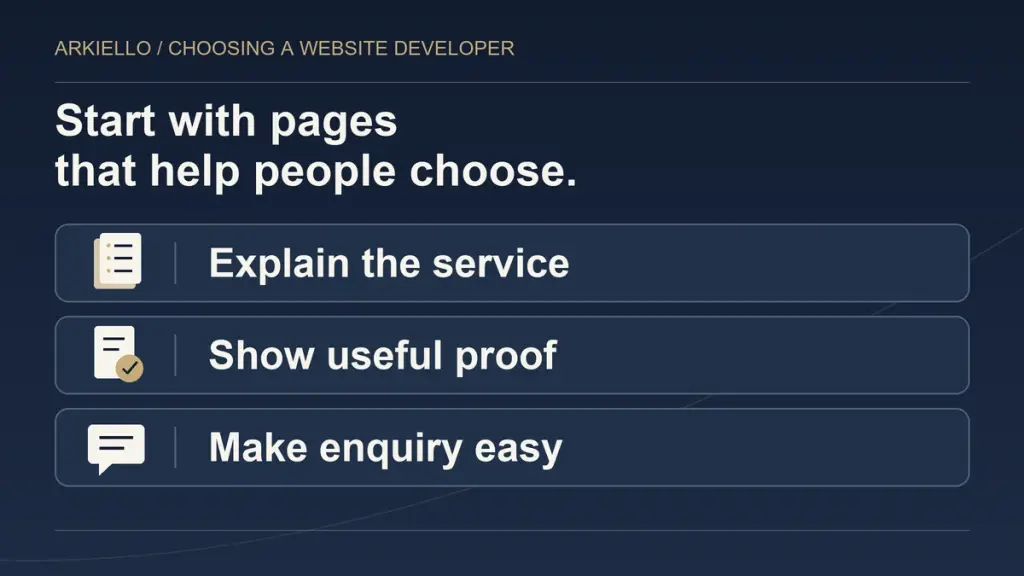
Your first business website needs to give a prospective customer enough information to understand the offer and take a useful next step. The right launch scope depends on the services, evidence and decisions involved. Choosing a page count before understanding those needs can leave important questions unanswered.
ARKIELLO’s website development service in Tagaytay and Cavite starts with your business and what the website must help people do. You can plan a focused first launch while keeping a clear path for later additions.
Start with the first customer decision
Write down what someone needs to decide before contacting you. That might include whether you provide the right service, whether you cover their location, whether your work suits their needs and what happens after an enquiry.
Use the questions your team already receives as a starting point. Record which answers apply across the business and which need service-specific detail. A short, clear explanation is useful when the offer is straightforward. More complex services may need separate pages so people can understand the relevant information.
Ask the developer to explain how the proposed structure supports these decisions. Each page should have a purpose that your team can describe.
Decide when one page becomes too crowded
A compact website can work when the offer, supporting information and contact route fit together clearly. Separate pages become useful when visitors need different service details, substantial project examples or a clearer route to a particular task.
For example, a business with one defined service may have a different starting structure from a studio offering photography, films and several types of event coverage. The scope should reflect those differences. A page count alone does not explain how either website will work.
Our MCT Productions website project shows portfolio and film content organised into different browsing areas. It is in development with a public preview. The example helps illustrate a content decision; your first launch should follow your own offer and available material.
Include evidence you have permission to publish
People need something concrete to assess. That might be an approved project example, original photographs, service details or a clear explanation of your process. Agree what the business can provide and which material needs preparation before it appears online.
If you are starting a new business, use accurate information about your offer and experience. Treat client permissions, image rights and the wording around previous work as decisions to settle during planning. A new website does not need invented testimonials or results to look complete.
The Avelora Life website revamp provides another type of example: service and location content for a non-medical home and community support business in Canada. Its structure is useful context when discussing information needs, rather than a page template for every industry.
Plan the first enquiry all the way through
Agree what visitors should do when they are ready. They may need to describe a project, ask about availability or request a discussion. Explain what information is useful and who will receive it.
Include the receiving team’s part in the launch plan. Decide who checks enquiries, where messages should arrive and what confirmation a visitor should see. Arrange an authorised test of the agreed journey before public launch, including a phone-width check.
A button opening a form is one part of that journey. The team should also know whether the message reaches its intended destination and how to respond. Keep the first enquiry focused on information needed for the conversation.
Separate launch essentials from later additions
Create two lists with your developer: the work needed for the agreed first launch and additions that can be scoped later. Connect each item to its purpose, required content and approval owner.
Possible later work might include more project stories, an expanded resource section or an integration that needs further assessment. Some businesses will need a booking or commerce function at launch; others can begin with a clear enquiry route. Agree that distinction before the build starts.
Use our ownership, access and handover guide to settle who controls the accounts and approves the finished work. If you are also deciding how to collaborate, compare local and remote website developers by the working arrangements your team needs.
Plan a useful first launch
Tell ARKIELLO about your first business website. Share the business, location, services, available content, tasks visitors need to complete and any real deadline. We can discuss the initial structure and separate essential launch work from later additions.